

Solving Container Performance Issues with Prometheus & cAdvisor
Set up monitoring for Docker containers using cAdvisor and Prometheus


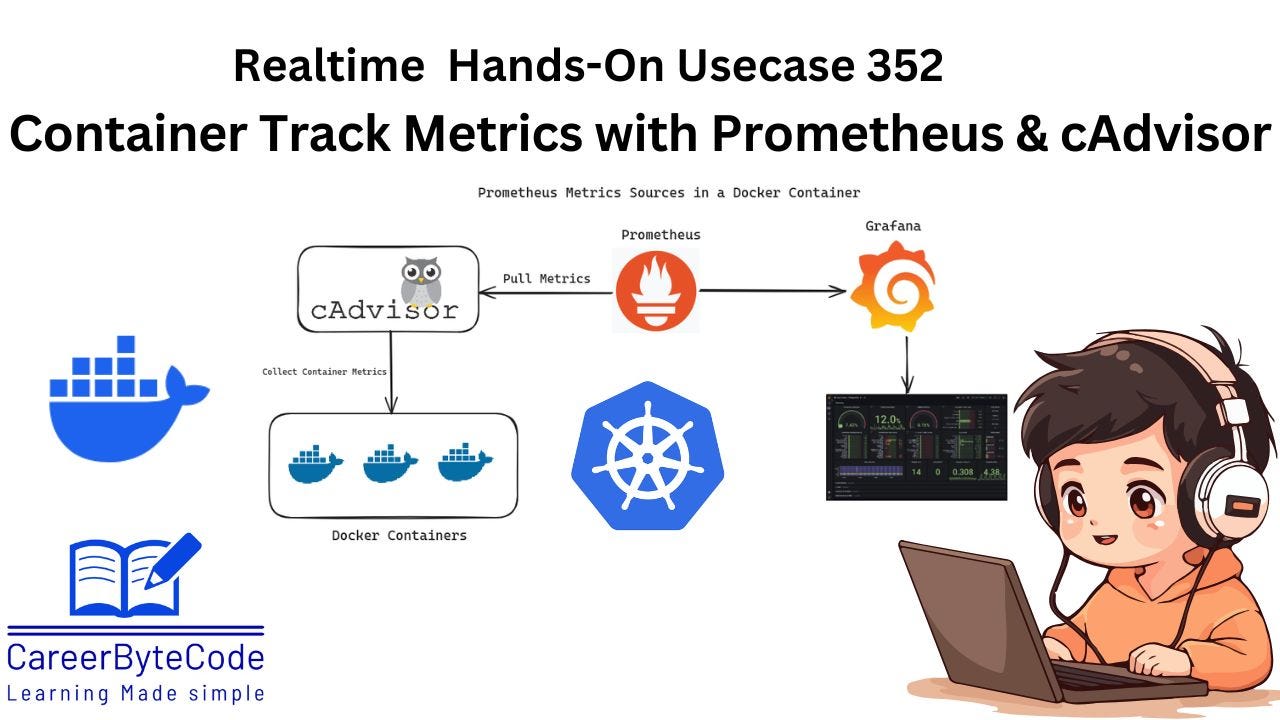
1. Introduction
Monitoring containerized applications is very crucial for performance optimization and troubleshooting in DevOps world.
Prometheus is one such tool which is renowned for its powerful feature of scraping metrics from different sources like nodes or containers (through cAdvisor).
cAdvisor is a tool from Google that collects resource usage and performance statistics of running containers.
2. Why We Need This Use Case
In modern DevOps workflows, containerized applications have become the standard for deploying and managing software. However, as organizations scale their applications across multiple containers and microservices, monitoring becomes a critical requirement to ensure optimal performance, stability, and cost efficiency.
Key Reasons Why This Use Case is Needed:
Real-Time Performance Monitoring:
Containers are lightweight and ephemeral, often being created and destroyed dynamically.
Tracking CPU, memory, disk, and network usage in real time is crucial to prevent performance bottlenecks.
Troubleshooting and Debugging Issues:
Unexpected application crashes or degraded performance can be diagnosed using container monitoring.
Monitoring tools like Prometheus and cAdvisor provide historical data for root cause analysis.
Optimizing Resource Utilization:
Over-allocating resources increases cloud costs, while under-allocating can lead to application failures.
Monitoring containerized applications ensures that resource usage is optimized for cost efficiency.
Scaling and Load Balancing Decisions:
Monitoring helps determine when auto-scaling should be triggered based on actual resource consumption.
Ensures optimal load balancing by distributing traffic to healthy containers.
Security and Anomaly Detection:
Unexpected spikes in CPU or memory can indicate a security breach or a misbehaving application.
Monitoring helps detect abnormal behaviors and triggers alerts for security incidents.
Compliance and Auditing:
Industries like finance and healthcare require continuous monitoring of system performance.
Monitoring ensures compliance with service level agreements (SLAs) and security policies.
By implementing Prometheus and cAdvisor, organizations can gain end-to-end visibility into their containerized applications, ensuring high availability, reliability, and security.
3. When We Need This Use Case
This use case is required in various scenarios, including:
Deploying Microservices-Based Applications:
If your application consists of multiple containers running different services (e.g., Redis, Nginx, database, APIs), monitoring ensures each service is functioning properly.
Performance Benchmarking and Load Testing:
Before moving to production, measuring container resource utilization under load helps identify bottlenecks.
Helps optimize CPU/memory requests and limits in Kubernetes or Docker Swarm environments.
Cloud Cost Optimization:
Monitoring usage trends helps in adjusting auto-scaling strategies to prevent over-provisioning.
Reduces infrastructure costs in cloud environments like AWS, Azure, and GCP.
Failure Recovery and Troubleshooting:
If an application experiences unexpected failures, monitoring provides detailed insights into which container failed and why.
Helps identify out-of-memory (OOM) kills, CPU throttling, or disk I/O issues.
Ensuring Service Level Agreements (SLAs):
Organizations providing cloud-based services must ensure that applications meet SLAs.
Monitoring helps in generating reports on uptime, latency, and performance.
Kubernetes Cluster Monitoring:
In Kubernetes environments, monitoring individual containers helps track node utilization and pod performance.
Detects issues like high pod eviction rates, pending pods, and failed deployments.
In DevOps and Site Reliability Engineering (SRE) roles, monitoring is a fundamental requirement to maintain system reliability and performance.
This use case is required in various scenarios where containerized applications are deployed in production or development environments:
Deploying Microservices-Based Applications:
When applications consist of multiple containers (e.g., Redis, Nginx, databases, backend services).
Ensuring each microservice is functioning properly and identifying bottlenecks.
Performance Benchmarking:
Before deploying applications to production, monitoring helps in benchmarking CPU, memory, and network usage.
Helps in fine-tuning resource limits to prevent overloading.
Troubleshooting Application Failures:
If an application experiences performance degradation or downtime, monitoring helps diagnose the root cause.
Identifying failing services, high memory usage, or network latency issues.
Optimizing Cloud Costs in AWS, Azure, or GCP:
Cloud providers charge based on resource utilization; monitoring helps optimize costs.
Avoiding unnecessary scaling or excessive resource allocation.
Ensuring High Availability and Disaster Recovery:
Monitoring detects when containers crash and provides alerts for quick remediation.
Ensures minimal downtime for critical applications.
Compliance and Auditing:
Some industries require continuous monitoring of container environments for security and compliance purposes.
Logs and metrics collected can be used for audit trails.