

Managing Product Inventory in a Retail Store using Python Automation
Optimizing Product Stock Levels and Reducing Waste in Retail Stores


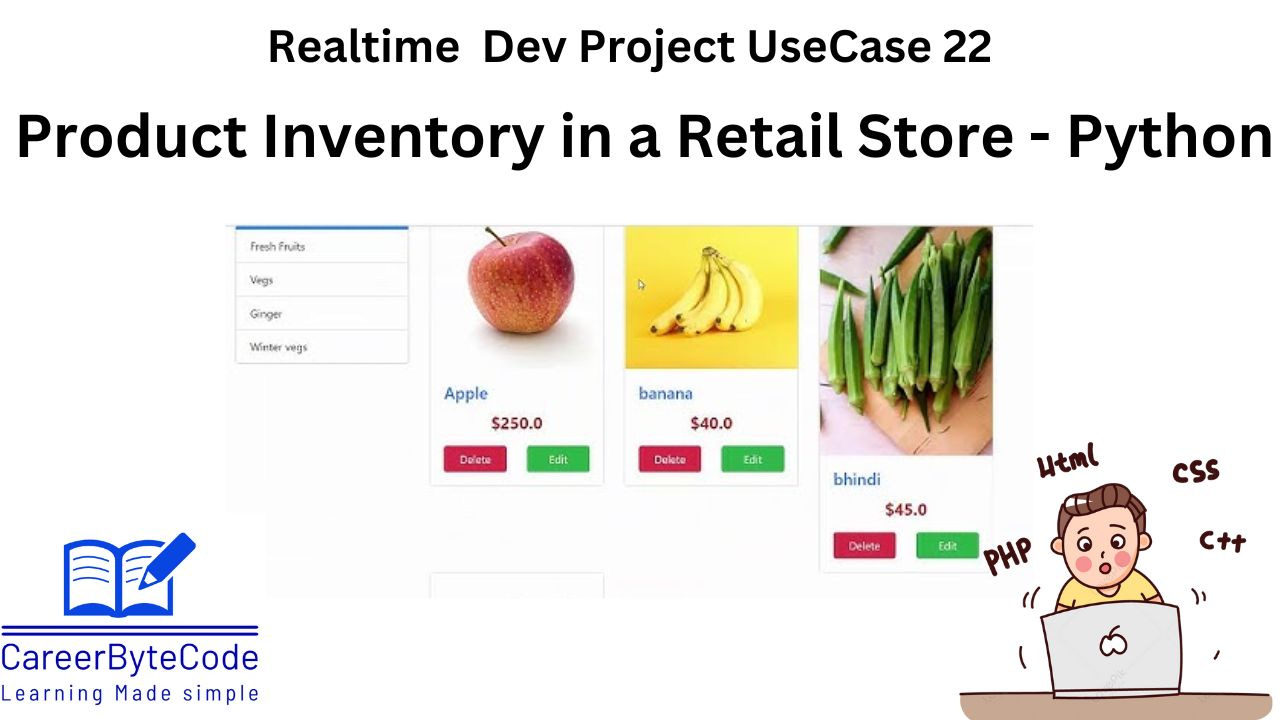
1. Inventory Management system using modules in python
Context:
This use case describes the interaction of the inventory management system, allowing the retail store to add products, update stock levels, check stock, and process sales. The system enables efficient tracking of product stock and sales, ensuring the business can meet customer demands while maintaining optimal inventory levels.
Actors:
Store Manager: The primary user who interacts with the inventory system to manage products and process sales.
Customer: The indirect actor whose purchase requests are processed by the Store Manager.
Preconditions:
The system is running and accessible by the Store Manager.
The Store Manager is logged into the system and has access to the main menu.
Main Flow:
Add Product: The Store Manager adds a new product to the system with a given name, price, and stock level.
Update Stock: The Store Manager updates the stock for an existing product.
Check Stock: The Store Manager checks the current stock of a product.
Process Sale: The Store Manager processes a sale, which reduces the stock of the sold product and calculates the total sales for the transaction.
Alternative Flow:
If the Store Manager attempts to add a product that already exists, the system will prompt them to update the stock instead.
If the Store Manager tries to process a sale for a product that is out of stock, the system will notify them of insufficient stock.
Postconditions:
The inventory is updated with the new or modified product details.
Sales are processed and stock levels are reduced accordingly.
Transaction information, such as total sales, is displayed to the Store Manager.
2. Why We Need This Use Case
This use case is essential to ensure smooth operations in a retail store. It helps the store manage product inventory efficiently, track stock levels, and calculate sales accurately. The system minimizes errors, ensures that products are available when needed, and provides real-time sales updates.
3. When We Need This Use Case
This use case is necessary during day-to-day operations in a retail environment. It is required when:
New products are introduced into the store.
Stock levels need to be updated based on sales or restocking.
The Store Manager needs to track current stock levels.
A sale needs to be processed and inventory updated.
