

Django + Python: Build Your Custom Blogging Platform
Creating a personal blog serves as a versatile and impactful platform for self-expression, knowledge sharing, and professional growth.


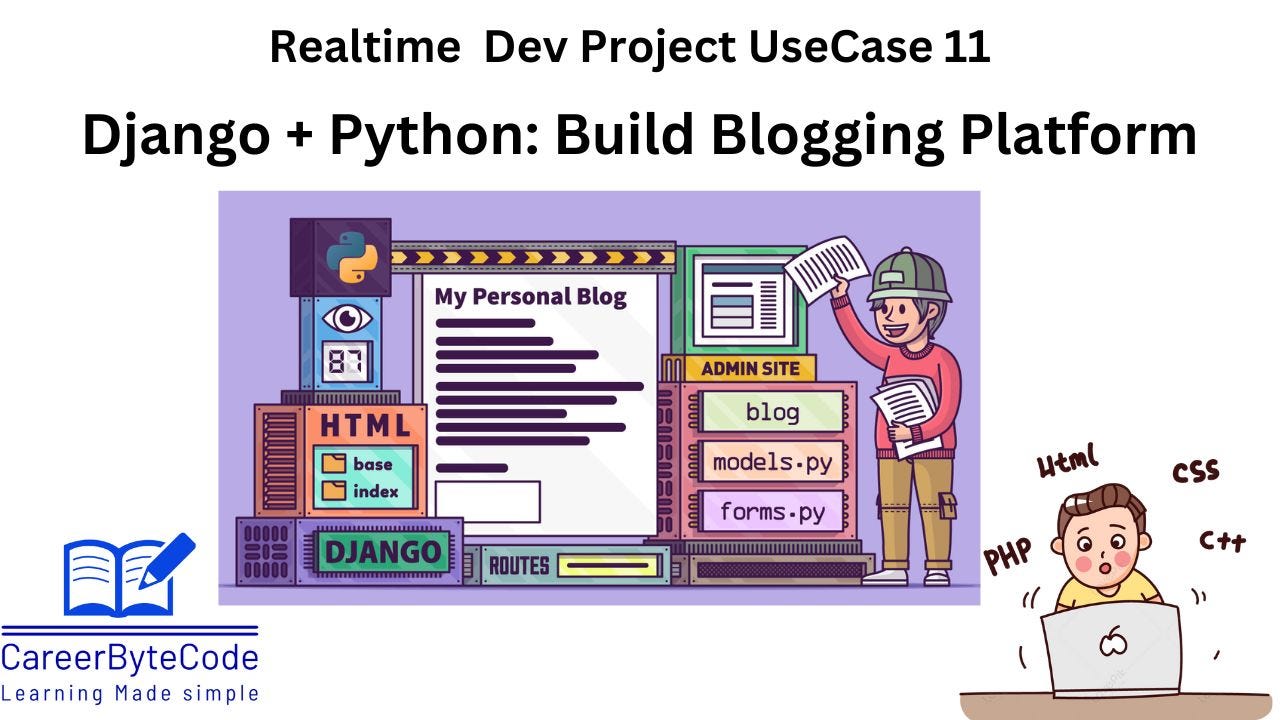
1. Create a Personal Blog with Django (Python)
Objective: Build a simple personal blog with Django where users can create, edit, and delete posts.
Prerequisites: Basic knowledge of Django, Python. Steps:
Install Django and set up a project.
Create models for Blog posts (title, content, created_at).
Implement views and templates to display posts.
Use Django’s form functionality to add new posts.
Set up a basic admin panel to manage posts.
2. Why We Need This Use Case
Creating a personal blog serves as a versatile and impactful platform for self-expression, knowledge sharing, and professional growth. Blogs have become an essential medium for individuals, freelancers, and even small businesses to establish an online presence. A Django-based blog offers the following benefits:
Self-Expression: It provides a digital space to express personal ideas, experiences, and expertise.
Skill Demonstration: Acts as a portfolio for developers or writers to showcase their skills in web development, creative writing, or technical expertise.
Professional Networking: Helps in building connections with industry professionals or a community with similar interests.
Learning Opportunity: Developing a blog with Django is an excellent way to gain hands-on experience in Python and modern web technologies.
Ownership and Control: Unlike using third-party platforms, building your own blog ensures you have complete control over the design, functionality, and data.
This use case is especially beneficial for those who want to go beyond just hosting a blog and aim to learn web development concepts like models, views, templates, user authentication, and database integration.
3. When We Need This Use Case
Educational Purposes:
Aspiring developers or students can use this project to understand the end-to-end web development lifecycle. Building a blog introduces critical concepts like MVC architecture, database interactions, and front-end integration.Portfolio Building:
A personal blog adds value to a professional portfolio. It showcases not only writing or creative skills but also technical abilities in web application development.Professional Brand Building:
Individuals looking to establish a personal or professional brand can use blogs as a platform to communicate their expertise, engage with an audience, and attract career opportunities.As a Prototype:
A Django blog can serve as a starting point or prototype for a larger content management system (CMS) or publishing platform.Testing and Experimentation:
For developers exploring new Django features or tools, a blog application serves as a safe and manageable project to experiment and implement changes.Community Engagement:
When aiming to engage with a specific audience—like tech enthusiasts, book readers, or hobbyists—a blog enables interaction through comment sections and content tailored to the community's interests.
