

AWS Serverless Alerting: Integrating Lambda, SES & CloudWatch with Terraform - Manual vs Automatic
AWS Lambda allows you to run code in response to events, such as changes in data or system states, without managing servers.


1. Why we need this use case:
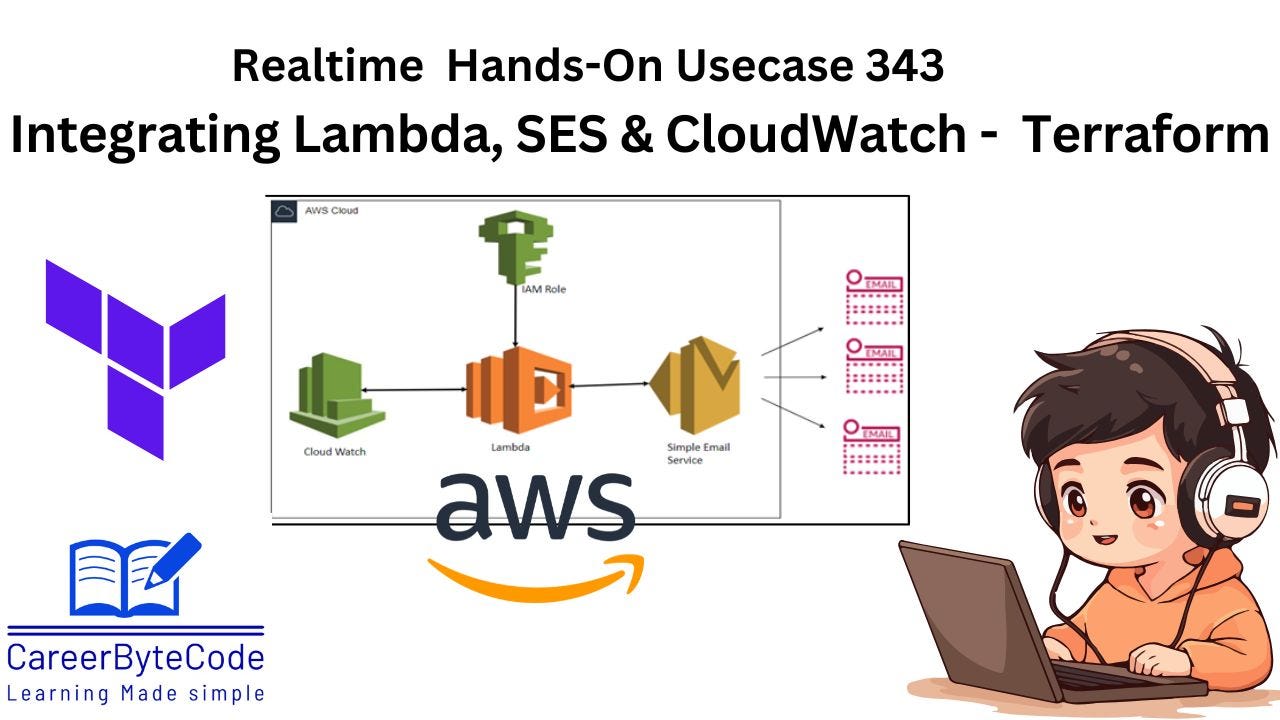
In cloud environments, automation is essential for scaling applications efficiently and ensuring high availability. AWS Lambda allows you to run code in response to events, such as changes in data or system states, without managing servers. When integrated with Amazon SES (Simple Email Service) and CloudWatch, it becomes a powerful solution for automating monitoring and notifications.
This use case demonstrates how to automatically trigger AWS Lambda functions using CloudWatch events, send alerts via SES, and manage all resources through Terraform. By automating these tasks:
Event-driven Automation: Lambda can trigger on specific events, such as system health checks or EC2 instance status changes, which improves responsiveness.
Monitoring and Notifications: CloudWatch enables continuous monitoring of your AWS resources, while SES sends emails in response to important events, such as system downtime or health issues.
Infrastructure as Code (IaC): Using Terraform ensures that your infrastructure setup is reproducible, version-controlled, and easy to deploy across environments.
Automating these components reduces manual effort, minimizes errors, and enhances operational efficiency in the cloud.
2. When we need this use case:
This use case is essential when you need:
Automated Monitoring: You want to set up alerts automatically based on predefined triggers, such as resource thresholds, system failures, or health checks. For example, automatically notifying the team when an EC2 instance goes down or CPU utilization exceeds a threshold.
Event-Driven Notifications: When specific events in your infrastructure (such as a failed deployment, or a critical system threshold) need an immediate alert to stakeholders.
Cost and Time Efficiency: When you need to automate infrastructure provisioning and event handling without manually configuring AWS Lambda, SES, or CloudWatch each time.
Scalability and Flexibility: The solution is highly scalable, as the Lambda function can automatically handle more events without manual intervention and SES allows sending emails to a large number of recipients.
